Analysis: The fiscal cliff isn’t a danger anymore — it’s the destination
Rejection of ACA subsidies signals a shift to 'governing by omission,' where weaponized deadlines achieve what legislation cannot.
In Washington, deadlines used to be the only thing that worked. Now, they are the only thing that matters—for all the wrong reasons.
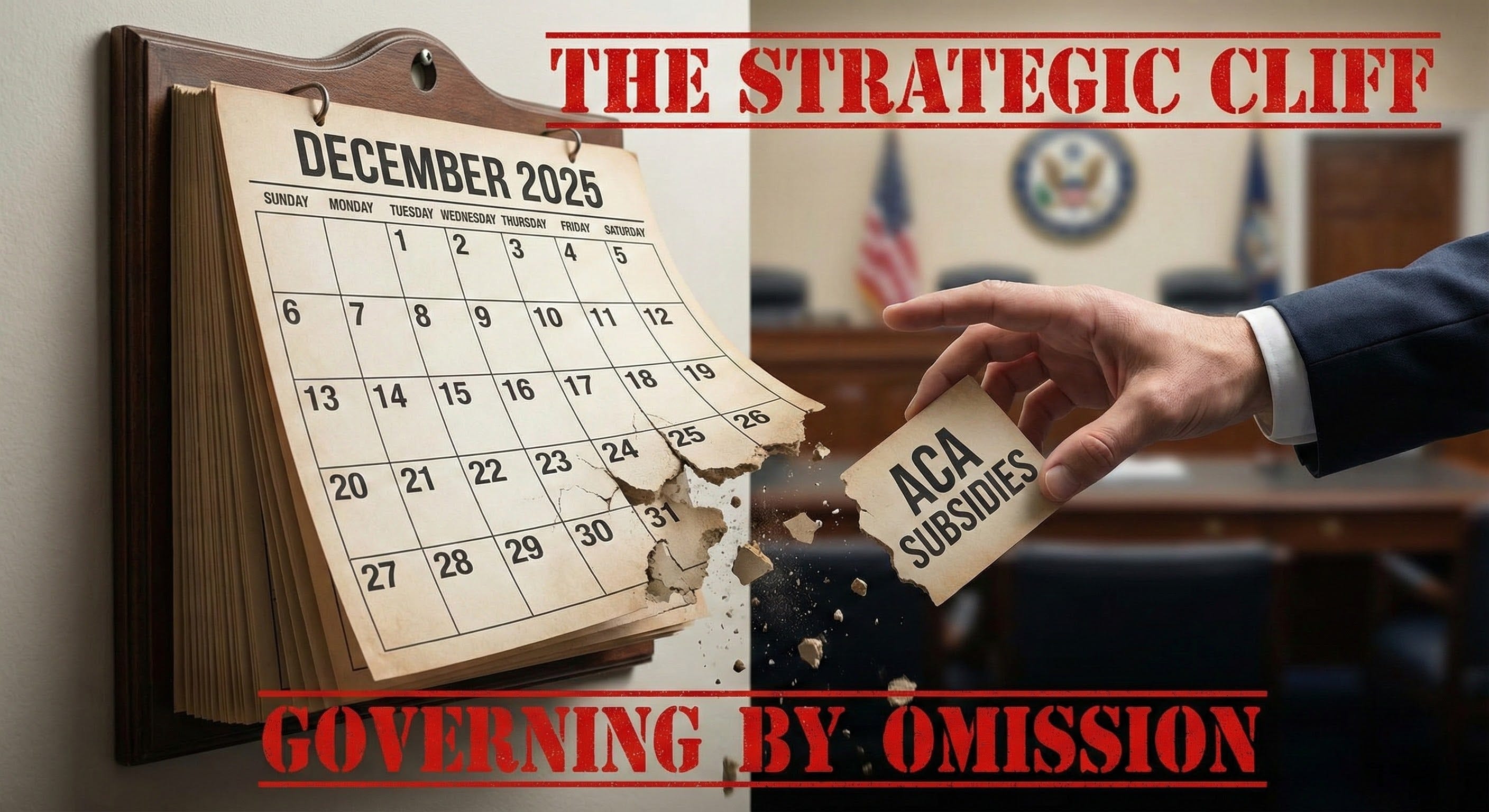
The Senate’s rejection of the Affordable Care Act tax credit extension Thursday marks a significant evolution in what has become known as "deadline diplomacy."
For decades, the threat of a fiscal cliff or a government shutdown was the stick used to force a carrot-and-stick compromise. But in the 119th Congress, the cliff is no longer a danger to be avoided; it is a destination to be reached.
This shift was telegraphed during the record-breaking 43-day shutdown earlier this fall.
Unlike the 16-day shutdown in 2013, which was an active (and failed) attempt by Republicans to defund Obamacare, or the 35-day partial shutdown in 2018-19 over border wall funding, the recent battles have been defined by "governance by omission."
In 2013 and 2018, the shutdowns were offensive maneuvers — attempts to change the status quo.
The current strategy, culminating in Thursday’s vote, is defensive and passive.
By simply letting the clock run out on pandemic-era subsidies, opponents of the ACA achieved a policy goal—reduction of federal health spending—without the messiness of passing a repeal bill.
It is a weaponization of the legislative calendar that turns the standard logic of Congress on its head. Traditionally, "must-pass" bills were vehicles for riding compromised policy into law. Now, they are hostages.
"The goalposts have moved from 'how do we keep the lights on' to 'who looks worse in the dark,'" said one Democratic aide involved in the failed negotiations.
The result is a new form of fiscal warfare where the collateral damage — in this case, millions of Americans facing premium hikes — is priced in as a political cost of doing business.
As Sen. Angus King noted, the strategy relies on the public knowing who to blame. But as the deadlines pile up and the cliffs get steeper, the public is increasingly left wondering if anyone is trying to steer the car at all.