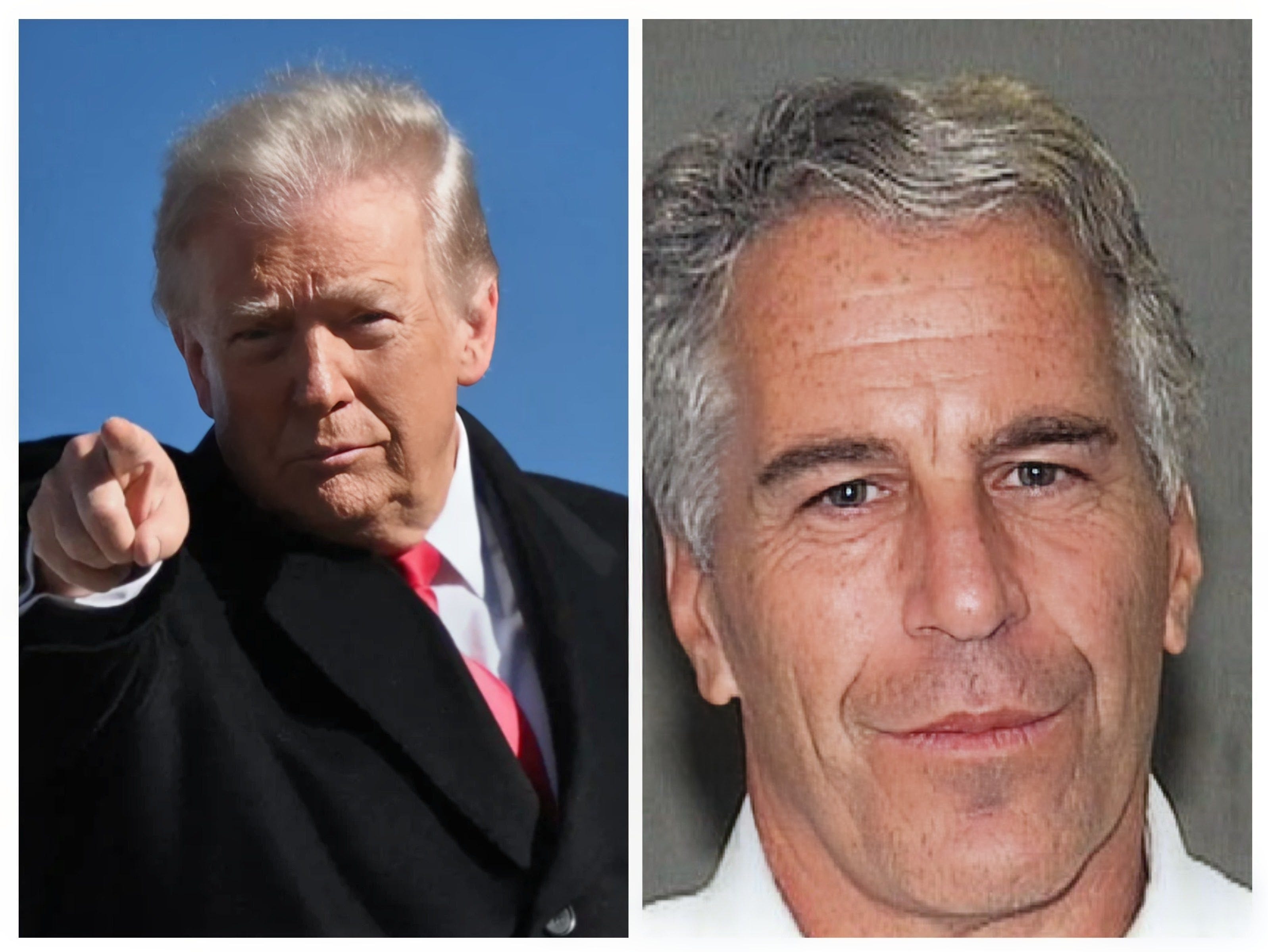
Why the debate over the Epstein files 'exoneration' never ends
A look at the transparency paradox, the weaponization of raw FBI tips and the death of a shared dictionary.

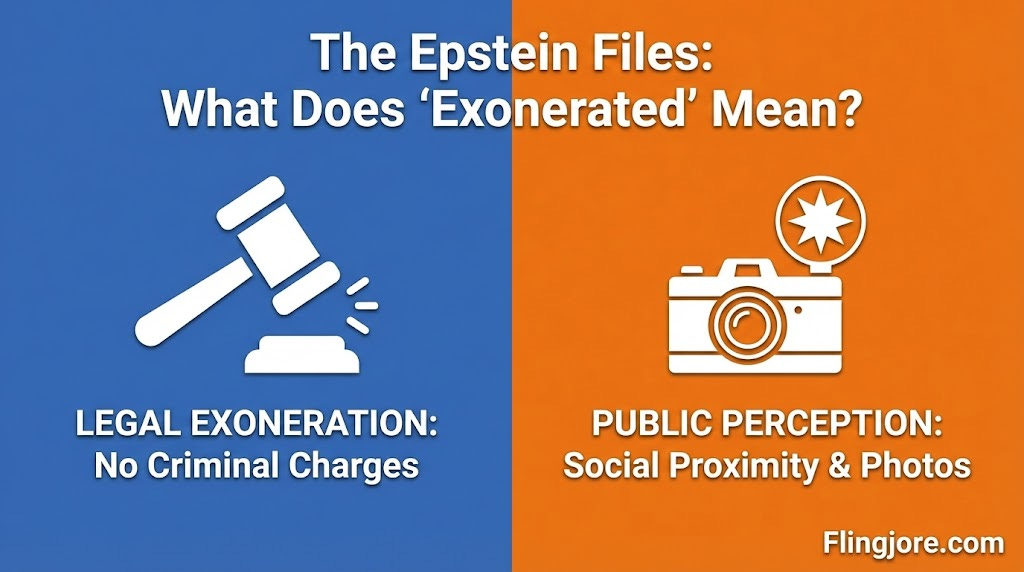
President Donald Trump insists the recently released Jeffrey Epstein files provide total exoneration. Meanwhile, headlines and public outcry suggest the exact opposite, pointing to an active cover-up and unsavory connections. The gap between these two narratives hinges on a fundamental dispute over nomenclature: the strict legal definition of criminal liability versus the public’s standard for moral and social distance.
When opposing sides argue from two fundamentally different realities, the debate will persist.
The definition divide is a feature, not a bug: The administration will keep using the legal shield (”no indictment”) and critics will keep using the social one (”look at the photos”). They are speaking two different languages on purpose.
The weaponization won’t stop: Political actors will continue to mine the unverified FBI tip lines for narrative ammunition. The temptation to use raw data to confirm a bias is too strong for partisans to abandon.
The transparency paradox holds: The more the administration tries to aggressively manage the optics of the document release, the more entrenched the “cover-up” narrative becomes.
What we can do is remove the mystery of the argument by stripping away the spin to offer a clear, verified map of exactly why the two sides are screaming past each other. It doesn’t stop the noise, but it isolates the signal and forces the conversation back to verifiable facts rather than identity-driven narrative traps.
To understand what this fallout means for the American electorate and the broader landscape of institutional trust, examine the mechanics of how information is currently weaponized, filtered and ultimately consumed.
Definition divide: Legal clearance vs. social proximity
The term “exoneration” carries immense weight. In a courtroom, it represents the ultimate victory. In the court of public opinion, however, its meaning fractures. What it means for the current political climate is that the justice system and the electorate no longer operate using the same dictionary.
In legal and investigative frameworks, exoneration aligns with a lack of actionable evidence for prosecution. The Justice Department and the FBI maintain that their exhaustive reviews yield no basis to charge uncharged third parties. Because the justice system operates on the presence of provable crimes — requiring evidence that meets the high threshold of “beyond a reasonable doubt” — the absence of an indictment functions as a technical, legal exoneration. In the eyes of the law, being named in an investigative file, or even associating with a convicted criminal, does not equate to criminal wrongdoing.
Trump leverages this legal reality to declare absolute innocence. Speaking to reporters aboard Air Force One in February 2026, the president states unequivocally: “I have nothing to hide. I’ve been exonerated. I have nothing to do with Jeffrey Epstein. They went in hoping that they’d find it and found just the opposite.”
This stance finds support in official law enforcement documentation. An internal FBI review memo concludes that a systematic review “revealed no incriminating ‘client list’” and uncovers no evidence that could “predicate an investigation against uncharged third parties.” For a defense attorney, this memo is the end of the conversation. The government investigated, the government found no crime to prosecute, therefore the subject is cleared.
The public uses a different dictionary, however, and the implications of this shift are profound.
To the average observer, “exonerated” implies complete vindication and a total absence of involvement. It implies clean hands. The unsealed files severely complicate this pristine image. The documents confirm Trump’s extensive social proximity to Epstein in the 1990s and early 2000s. They include flight logs detailing trips on Epstein’s private jet. They feature photos showing the president in a hot pool with Epstein alongside a person the Justice Department describes as a victim.
What this means for political discourse is that legal survival no longer guarantees political survival. The tension lives entirely in the definition of the word. Trump points to the lack of a federal indictment as an exoneration; the public points to the pool photos and the flight logs as a moral indictment.
When a politician uses a legal term of art to dismiss circumstantial social evidence, it breeds resentment. The electorate perceives it not as a statement of fact, but as a loophole. The administration relies on the strict, narrow parameters of Title 18 of the U.S. Code, while voters apply the much broader parameters of common sense and social decency. Because neither side acknowledges the other’s standard of measurement, the debate remains permanently deadlocked.
Transparency paradox and the erosion of institutional trust
The second critical framework involves how the administration’s attempt to control the narrative actively fuels the conspiracy theories it attempts to squash. The instinct to manage the optics creates the very “cover-up” narrative the public latches onto.
What this means on a macro level is the continued, perhaps irreversible, erosion of faith in the Department of Justice as an impartial arbiter of fact.
In November 2025, Trump signs the Epstein Files Transparency Act into law, compelling the release of millions of documents. The stated goal is ultimate transparency, a cleansing of the historical record. By Jan. 30, 2026, the Justice Department publishes nearly 3.5 million pages.
Yet, the method of this transparency breeds profound skepticism. True transparency, in a journalistic and historical sense, requires releasing raw data without heavy-handed editorializing by the state. Let the documents speak for themselves. Instead, the DOJ opts to tell the public exactly how to interpret the files before they even read them.
When the DOJ releases the final massive tranche of documents, the agency includes a highly unusual, politically charged defense of the president in its official press release. The statement reads: “Some of the documents contain untrue and sensationalist claims against President Trump that were submitted to the FBI right before the 2020 election. To be clear, the claims are unfounded and false...”
This is the transparency paradox in action. When a government agency uses an official document dump to preemptively run interference for its chief executive, public trust naturally fractures. The DOJ abandons its traditional posture of silent, objective neutrality and steps into the role of a public relations firm managing crisis communications for the White House.
Critics immediately label the process a cover-up. Former Secretary of State Hillary Clinton, speaking at the Munich Security Conference in February 2026, accuses the administration of bad faith. “What we’re seeing, I think it’s fair to say, is a continuing cover-up by the Trump Administration,” Clinton states. Her words resonate because the administration’s defensive posture provides the fertile soil required for such accusations to take root.
Lawmakers echo this sentiment. Rep. Pramila Jayapal (D-Wash.) and Rep. Jamie Raskin (D-Md.) criticize the DOJ’s handling of the files and accuse the department of tracking lawmakers’ search histories as they review the documents. Jayapal calls the department’s actions “totally unacceptable”.
What this means for the future of government transparency is grim. By aggressively framing the release, the administration undermines the transparency itself, transforming a document dump into a partisan battleground. It signals to the public that no information coming from the government is truly unfiltered. Even when demanding transparency via legislation, the delivery mechanism remains contaminated by political self-preservation.
Weaponization of raw data vs. journalistic verification
The final layer of the disconnect stems from the public conflation of raw FBI tip lines with verified evidence. This is the most dangerous element of the fallout and what it means for the information ecosystem is that the line between rumor and reality is actively being erased by bad actors.
The DOJ’s January release contains thousands of unverified tips submitted to the FBI over the years. Law enforcement standard operating procedure dictates that investigators record and log these claims, regardless of their immediate credibility. The FBI cannot simply throw away a tip because it sounds outlandish; it must document the call, log the information and then determine if it warrants further investigation.
Consequently, the released documents feature raw tips, crackpot theories and handwritten interview notes that name high-profile figures across the political spectrum.
The DOJ explicitly notes that several claims regarding Trump surface right before the 2020 election and the production includes fake or falsely submitted images. Because the Transparency Act mandates the release of responsive files, everything sent to the FBI by the public — including politically motivated fabrications — is now public record.
The presence of a name in an FBI tip line log does not constitute a verified fact of criminal behavior. It simply means someone, somewhere, made a phone call.
in the court of public opinion, however, the distinction between a logged anonymous tip and corroborated evidence vanishes. When raw data drops into the public domain, political actors, social media influencers and commentators mine the documents for out-of-context quotes or unverified accusations to confirm preexisting biases. They present an unverified FBI intake form as if it were a signed confession.
This is the weaponization of raw data. The verified facts — the flight logs, the photographs, the documented social interactions — blur seamlessly into the unverified tips, creating a feedback loop where the narrative outpaces the legal reality. Partisans isolate the single tip that implicates their political rival, ignore the ten tips that implicate their allies and blast it across social media ecosystems.
For journalism, what this means is that the traditional role of the gatekeeper is more vital, and more under siege, than ever. The mandate is to prioritize verification over narrative. The verified facts warrant intense scrutiny and reporting. The unverified tips require context, disclaimers and rigorous investigation before publication. Treating an unverified tip as breaking news falls into an identity trap, feeding a cycle of misinformation that damages the credibility of the press.
Ultimately, Trump remains legally cleared of Epstein’s crimes. Yet, the undeniable social ties, the chaotic nature of the document release and the weaponization of the to files themselves ensure that his claim of “exoneration” faces permanent resistance.
The public remains trapped in a cycle where the government dictates legal realities that the electorate’s eyes refuse to believe, guaranteeing the debate survives long past the final document dump.