


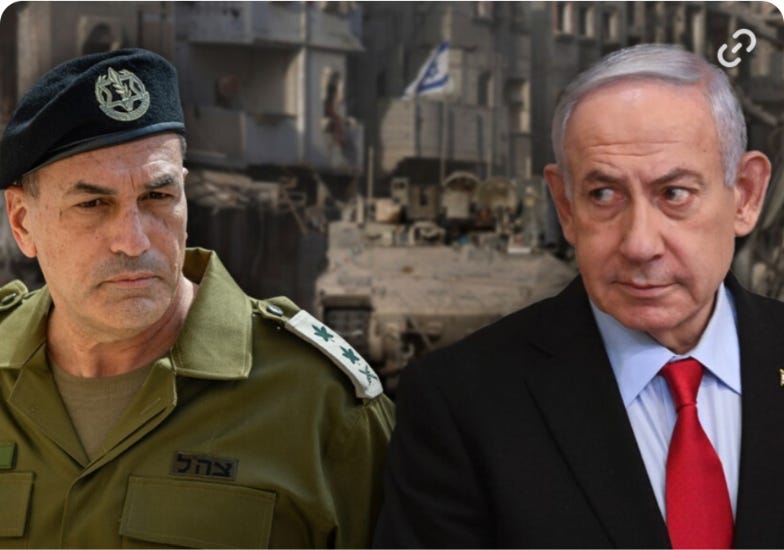
An institutional standoff has paralyzed the upper echelons of Israel’s defense establishment, with military leaders actively blocking a directive from Prime Minister Benjamin Netanyahu to strike Iran days before national elections.
Israel Defense Forces Chief of Staff Eyal Zamir is refusing to execute the order without explicit, signed legal authorization from the cabinet. The demand for a formal paper trail exposes a total breakdown of trust between the civilian government and the military. By insisting on written orders, the general staff has built a bureaucratic firewall against what it views as the weaponization of national security for electoral survival.
The confrontation centers on an undisclosed operation that military intelligence assesses carries an extreme risk of triggering a regional war. A senior security officer told the Israeli news outlet N12 that the proposed directive “could lead to a flash conflict with Iran at a sensitive and dramatic time, and create a miscalculation.”
Military commanders fear the prime minister aims to manufacture a security crisis to shift the domestic narrative, rally his political base or potentially delay Tuesday’s vote. Zamir is demanding an in-depth strategic review and legal signatures to ensure the military does not shoulder the blame for an unprompted escalation.
Netanyahu vehemently denies reports of a confrontation. The prime minister called the allegations false and attempted to redirect focus toward Tehran, noting that the IDF chief himself has acknowledged Iranian efforts to interfere in the Israeli democratic process. Underscoring his narrative, Netanyahu released severe warnings on social media, including AI-generated imagery of a nuclear detonation over Tel Aviv, framing the election as an existential choice between his leadership and national annihilation.
Despite the public denials, the friction triggered immediate backlash from political opponents who view the military’s leak as a distress signal. Yisrael Beytenu party head Avigdor Liberman told The Jerusalem Post the chief of staff’s duty is to “prevent the political use of the IDF and to safeguard the lives of IDF soldiers, not endanger them because of the prime minister’s fear of losing the elections.”
The crisis unfolds against a volatile geopolitical backdrop. Intelligence assessments indicate Netanyahu pressed the United States for a joint preemptive strike on Iranian nuclear facilities earlier this month, a request the Trump administration reportedly declined. According to defense sources, Zamir explicitly warned American defense officials that an attack would severely disrupt the Israeli elections, a caution that persuaded Washington to hold back.
The military command maintains it sees no sudden shift in Iranian operational behavior necessitating an urgent strike. Security officials warned the political echelon that telegraphing war for domestic consumption carries immediate risks. Aggressive posturing in Jerusalem translates into actionable intelligence in Tehran, potentially prompting the Islamic Republic to launch its own preemptive strike.
Regional powers are moving swiftly to isolate the conflict. Senior representatives from Saudi Arabia, Pakistan and Turkey, members of the newly formed Mecca Pact, convened in Tehran this week for high-level discussions with Iranian defense and intelligence officials. The diplomatic push aims to manage regional proxies and prevent the exact flash escalation the Israeli military command is resisting.
Zamir’s demand for written authorization represents a rare revolt within the bounds of military protocol. By insisting on signed documents, the IDF chief forces civilian leadership to assume total legal and historical responsibility for the fallout. The tactic effectively stalls the operation, as political leaders traditionally rely on plausible deniability and verbal directives for high-risk clandestine operations.
As voters prepare to head to the polls, the standoff leaves the Israeli public navigating a fractured state apparatus. The prime minister claims he alone stands between Israel and nuclear destruction, while the military’s highest-ranking officer signals that the prime minister is the immediate threat to regional stability. The military remains on high alert, waiting for a legal signature the political echelon appears unwilling to provide.