



In modern warfare, the speed of an aerial threat is measured in minutes, but the diplomatic machinery designed to neutralize it often grinds away for hours.
Imagine a rogue drone slipping across an international border under the cover of a moonless night. Radar operators monitoring the eastern flank instantly spot the inbound threat. Allied fighter jets are quickly scrambled, their afterburners lighting up the runway as they race to track the uncrewed aircraft humming over rural farmland. But instead of pulling the trigger to eliminate the danger, the pilots are forced to hold their fire and wait for political clearance.
For years, the NATO alliance has required extensive deliberation to agree on how to respond to such an incursion. To shoot down a simple uncrewed target, military leaders had to run a complex diplomatic gauntlet, seeking unanimous permission from 32 distinct national capitals. Now, that dangerous bureaucratic paralysis may finally be coming to an end.
As first reported by Politico Europe, a coalition of NATO allies is officially backing a proposal to grant sweeping new defensive powers to the alliance’s top military brass.
Under the developing plan, NATO’s supreme allied commander Europe would receive unprecedented operational authority to authorize the immediate destruction of unauthorized drones entering allied airspace.
This pending proposal aims to dramatically streamline responses to aerial incursions on the eastern flank, cutting through thick bureaucratic red tape to allow for split-second, real-time defense.
If formally approved by the North Atlantic Council, the move will empower military command — currently led by U.S. Army Gen. Christopher Cavoli, with key operational execution from high-level commanders like Gen. Alexus “Grinch” Grynkewich — to neutralize uncrewed aerial threats across a unified theater.
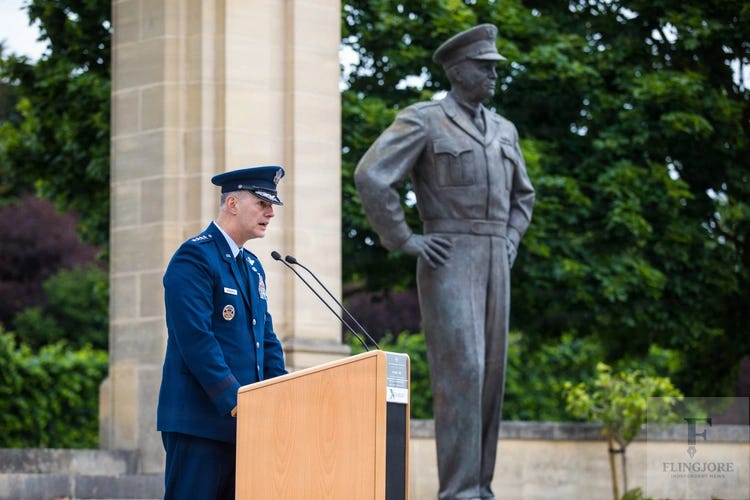
Most critically, it will effectively end the fatal bottleneck caused by the old system of unanimous political consensus, handing tactical control back to the military professionals actively monitoring the skies.
Reporting indicates that allied leaders increasingly recognize that when a rogue drone enters allied airspace, front-line personnel do not have the luxury of extended deliberation. By the time dozens of capitals are briefed and a consensus is reached, a fast-moving threat has often already struck its target or vanished back across the border.
If NATO command is handed this expanded authority, it will represent a massive, pragmatic shift in operational doctrine. For more than seven decades, the alliance has operated on the bedrock principle of strict political consensus. This foundational rule ensured every member state, large or small, had an equal voice in military engagements, acting as a crucial safeguard to prevent the accidental escalation of a regional crisis into a full-scale war.
But the ongoing war in Ukraine, coupled with the rapid proliferation of cheap, highly lethal drone technology, has completely rewritten the rules of modern combat. In recent months, the threat has moved from the realm of theoretical tabletop exercises to a terrifying reality for citizens living near the conflict zone.
Stray Russian drones, specifically Iranian-designed Shahed loitering munitions heavily utilized in the war in Ukraine, have repeatedly violated NATO airspace. The geography of the conflict makes these incursions practically inevitable under the current operational tempo. Russian forces routinely target Ukrainian grain export hubs along the Danube River, such as the ports of Izmail and Reni. These targets sit just hundreds of meters across the water from sovereign Romanian territory.
During nighttime bombardments, drone debris has repeatedly fallen near the Romanian border village of Plauru, forcing the government to deploy emergency air raid sirens and construct bomb shelters for local residents. Similar airspace violations have occurred in Poland and Latvia during massive Russian missile and drone barrages aimed at western Ukrainian energy infrastructure.
These incidents have sparked outrage from Eastern European leaders, who have consistently complained that NATO’s slow response times leave their citizens deeply vulnerable to spillover violence. According to widespread media coverage, the push for this new, streamlined authority is heavily supported by those front-line states who feel the immediate, daily pressure of the conflict on their borders.
Defense analysts and critics of the legacy system argue that waiting for political consensus is a severe liability in the age of automated warfare and autonomous drone swarms. The old rules of engagement were written for the Cold War, operating on the assumption that early warning radar would detect heavy Soviet bombers with enough time to convene political leaders.
Today, a Shahed-style drone launched from just across the border leaves defending forces with a reaction window of only a few minutes. Furthermore, these loitering munitions fly low and slow, purposefully evading traditional radar systems configured to track fast-moving fighter jets. This operational reality necessitates instantaneous decision-making the absolute moment a target is positively identified.
The proposed shift would address this reality by utilizing command hubs like the Combined Air Operations Center in Uedem, Germany, where allied teams watch glowing radar screens 24 hours a day. Under the new protocol currently being debated by the alliance, if a hostile or unidentified drone crosses into NATO airspace and poses an immediate threat to life or critical infrastructure, operational commanders could give the green light to shoot it down instantly.
However, NATO officials have historically emphasized a crucial caveat to these types of operational shifts. The expanded rules of engagement are expected to be strictly limited to uncrewed aerial systems. The engagement of crewed fighter jets, reconnaissance planes or bombers would still require traditional, high-level political consultations. Striking an aircraft with a human pilot inside carries a significantly higher risk of sparking a direct, wider war with a nuclear-armed power, which remains a firm red line the alliance is fiercely careful not to cross.
For the nations sharing a border with Russia and Ukraine, the policy change cannot come soon enough. Baltic and Eastern European leaders have been heavily lobbying for this exact type of streamlined defense for well over a year. They argue that hesitant, delayed or purely observational responses only encourage adversaries to test NATO’s borders further.
By backing this proposal, NATO is signaling a clear shift in grand strategy. Tactical speed is now viewed as the primary and most reliable deterrent against regional aerial aggression. If an adversary knows a drone will be systematically blown out of the sky the exact second it crosses an allied border, military planners believe the adversary is far less likely to send it in the first place.
The deterrence factor is a primary driver behind the alliance’s willingness to evolve its command structure. When an alliance shows hesitation, adversaries map those slow response times and exploit the defensive gaps. By removing the need to consult 32 capitals for a routine interception of uncrewed hardware, NATO is actively closing those gaps and securing its airspace.
As drone technology continues to evolve faster than traditional diplomacy, this impending shift in NATO policy will likely serve as a crucial blueprint for future defense strategies worldwide. The alliance is learning a hard lesson from the tense skies over Eastern Europe. In the 21st century, diplomatic unity is an essential foundation for the alliance, but operational speed and unity of command are just as critical as the advanced fighter jets and surface-to-air missiles deployed on the flight line.