The 120-Hour Mask: Trump’s Iran Pause and the Naval Pivot
Wall Street is buying the "peace" narrative, but the 11th Marine Expeditionary Unit is entering the strike zone. Here is the logistical math behind the five-day window.

In the predawn hours on Monday, the ticker at the New York Stock Exchange appears to be reading from a different reality than the satellite feeds at the Pentagon. As the opening bell rings, the Dow Jones Industrial Average stages a frantic 1,000-point recovery, fueled by a Truth Social post from President Donald Trump declaring a five-day pause in the threatened strikes on Iran’s national power grid. For a few hours, the war premium that has pushed oil toward $120 a barrel evaporates in the heat of a digital diplomatic breakthrough, as traders bet that the world’s most volatile conflict has finally found an off-ramp.
By the time the closing bell echoes through the canyon of Wall Street, that optimism curdles into a 631-point gain, a shadow of its morning peak as Tehran’s categorical denial of any secret talks crashes against the White House narrative. This is the stabilization pivot—a sophisticated exercise in managed volatility designed to break the momentum of record energy prices while the Pentagon quietly repositions its strike assets for a more devastating Friday deadline. It reflects a new era of statecraft where the primary theater of operations is no longer just the Persian Gulf, but the global financial markets that sustain the American economy.
The current strategy treats global financial markets as a primary theater of war. By announcing a five-day postponement of strikes, the administration successfully deflates Brent crude from its $120-per-barrel peak to near $100, providing immediate political relief to an American public facing $4-a-gallon gas. This unilateral de-escalation relies on high-probability, state-directed leaks to establishment outlets to broadcast news of secret back-channels that the other side insists do not exist. In the 24-day-old conflict known as Operation Epic Fury, the truth has become a tactical stabilizer for a domestic economy allergic to a prolonged energy war.
The primary tension in the global economy remains the $120-per-barrel threshold. This figure is now a psychological and technical red zone for the White House, as crossing it almost guarantees a sharp spike in U.S. consumer prices and a corresponding drop in approval ratings ahead of critical mid-term cycles. By engineering a stabilization pause, the administration is effectively performing an emergency intervention on the global energy market. However, the efficacy of this strategy is beginning to wane as sophisticated traders begin to front-run these de-escalation signals, leading to shorter relief rallies and steeper subsequent crashes.
While the public narrative focuses on diplomacy, maritime tracking data and official Department of War updates indicate that the five-day window is a logistical necessity disguised as a diplomatic one. The USS Boxer Amphibious Ready Group, carrying the 2,500 Marines of the 11th Marine Expeditionary Unit, was deployed ahead of schedule in mid-March. Maritime tracking reveals that the Boxer group is currently steaming toward the North Arabian Sea, with an expected arrival in its designated strike box by Friday, March 27. This timing aligns precisely with the moment the president’s diplomatic window expires.
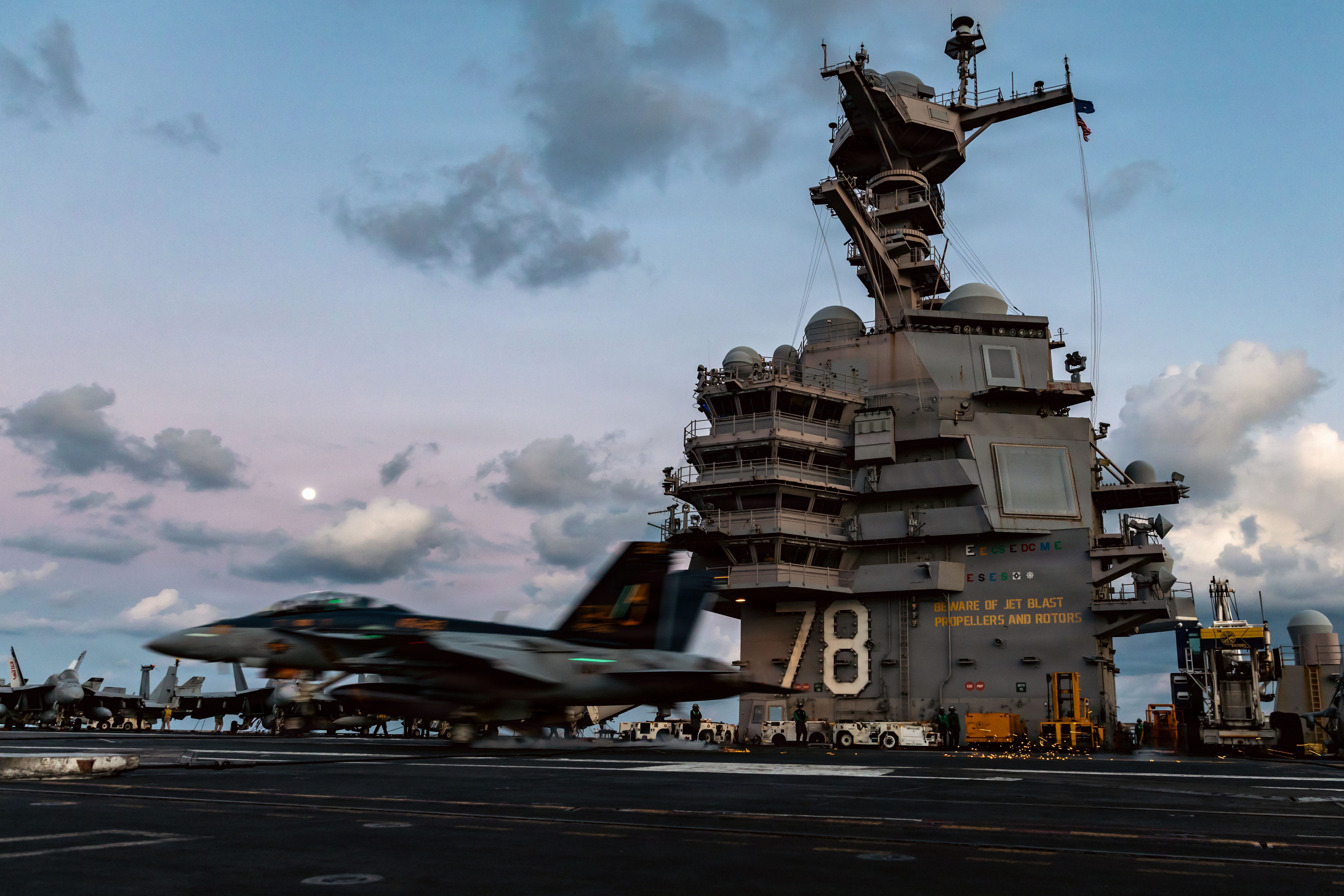
Military analysts suggest this is a tactical refill rather than a retreat. The USS Gerald R. Ford and USS Abraham Lincoln have been conducting more than 9,000 combat sorties in just 24 days. The five-day pause allows for the replenishment of precision-guided munitions and the finalization of targeting packages for a coordinated campaign against the Iranian grid. The USS Tripoli, another amphibious assault ship, is also en route, bolstered by F-35B Lightning II jets. The presence of two Marine Expeditionary Units suggests that the next phase of Operation Epic Fury may involve littoral operations, potentially targeting Iran’s Kharg Island, which serves as the nation’s primary oil export hub.
The role of regional intermediaries has also come under scrutiny with the emergence of the Muscat Protocol. New reports on Monday suggest the Swiss Ministry of Foreign Affairs is acting as the primary mediator for a freeze-for-freeze framework. Under this proposal, Washington would suspend strikes on Iranian infrastructure in exchange for Tehran halting its mining operations in the Strait of Hormuz and ending attacks on merchant vessels. This Swiss-led mediation likely provides the factual basis for the initial White House leak regarding productive talks, even as Tehran utilizes its public denials to maintain leverage and keep the market’s risk premium elevated. While the protocol remains the only viable diplomatic off-ramp, its success is tethered to a level of verification that neither side has yet granted.
The Iranian leadership in Tehran has spent the day aggressively dismantling the American peace narrative. Parliament Speaker Mohammad Bagher Qalibaf and the Foreign Ministry both labeled the reports of negotiations as psychological warfare intended to manipulate markets. By refusing to validate Trump’s claims, Tehran is effectively shorting the U.S. economy. They understand that if the market realizes the de-escalation is a solo act by Washington, the risk premium will return. According to maritime security updates, the Strait of Hormuz remains effectively closed despite the talk of a breakthrough, with commercial traffic down more than 80 percent. Iran continues to charge a $2 million per vessel transit fee, a war tax that keeps the global supply chain in a state of paralysis.
The subtext of the Iranian denial is clear: they are not looking for an off-ramp, but rather a structural shift in regional power. Their leverage remains the ability to target critical infrastructure outside their own borders, such as 21 confirmed attacks on merchant ships since the start of the month. A critical component of the stabilization maneuver is the use of establishment outlets like Axios and CNN as conduits for state-directed leaks. Throughout Monday morning, unnamed sources briefed these outlets on secret back-channels involving intermediaries from Turkey and Egypt. In this analytical framework, these leaks are viewed as high-probability market stabilizers that provide the narrative excuse for the Dow’s recovery while shielding the administration from charges of indecision.
The humanitarian cost of the 24-day conflict is also beginning to weigh on the international community. Rights groups report that more than 3,200 casualties have occurred since the start of Epic Fury, a total that independent monitors confirm includes the nine U.S. service members killed in March. This figure specifically accounts for the six Air Force airmen lost in the March 12 KC-135 Stratotanker crash and the three service members reported killed in action during the March 1 maritime interdiction. This level of granular verification bolsters the reporting priority of facts over the shifting administration narrative. A strike on the national grid would likely escalate this number significantly, potentially triggering a regional refugee crisis and further complicating the Pentagon’s logistical window before the Friday deadline.
The economic fallout is most visible in the transportation and industrial sectors. Airlines and cruise lines, which are highly sensitive to jet fuel and diesel costs, saw a momentary surge on Monday morning. Norwegian Cruise Line Holdings and United Airlines rose sharply as the peace signals hit the wires. But as the afternoon progressed and Tehran’s denials gained traction, these gains began to evaporate. The volatility is not just a byproduct of the war; it is being treated as a weapon by both sides. Washington uses volatility to deflate the oil bubble, while Tehran uses it to prove that the U.S. is no longer in control of the regional security architecture.
Operation Epic Fury has already surpassed the initial intensity of the 2003 Iraq invasion in terms of precision-guided munitions expended per day. The Department of War has maintained that the mission is focused on neutralizing Iran’s drone and missile production capabilities. Yet, the expansion of the target list to include the civilian power grid represents a significant shift toward a total war framework. This escalation is what necessitated the five-day stabilization pause. The Pentagon’s logistical tail was stretching thin, and the repositioning of the Boxer group was essential to provide the necessary amphibious assault capability for the next phase.
While the domestic political narrative frames this as a search for peace, the movement of the 11th Marine Expeditionary Unit tells a different story. The unit is specially trained for visit, board, search, and seizure operations, which would be required if the U.S. intends to forcibly reopen the Strait of Hormuz or seize Iranian oil platforms. The transit time from their last reported position near Socotra to the entrance of the Gulf is approximately 120 hours—exactly five days. This perfect alignment between the diplomatic window and the naval transit suggests that Friday is not a deadline for a deal, but a deadline for an escalation.
The strategic ambiguity ultimately means that the administration has lost the initiative. By making the markets the primary indicator of success, the White House has given Tehran a short-seller’s veto over American foreign policy. If Iran continues to deny the existence of a back-channel, they can force a market crash at their choosing. This puts the president in an impossible position: he must either follow through on a threat that will likely drive oil to $150 and destroy the domestic economy, or extend the pause again and admit the stabilization maneuver has failed.
As the sun sets over Washington on Monday, the focus shifts to the overnight markets in Tokyo and London. If the peace narrative holds, the Dow may find a bottom. But if maritime trackers show the Boxer group continuing its high-speed transit toward the Gulf, the relief rally will be remembered as a five-day distraction. The countdown to Friday, March 27, has begun, and the world is realizing that a manifest peace on social media is no substitute for a cleared waterway.
The final tally for Monday shows a market that is exhausted by the cycle of escalation and retreat. The Dow’s 631-point gain is a sign of a market that wants to believe in a deal but knows the logistics of war are still moving forward. The focus of the story is now the Friday strike boxes. If the Marines arrive and the diplomatic back-channel remains a ghost, the infrastructure phase of the conflict will no longer be a threat—it will be an inevitability.