


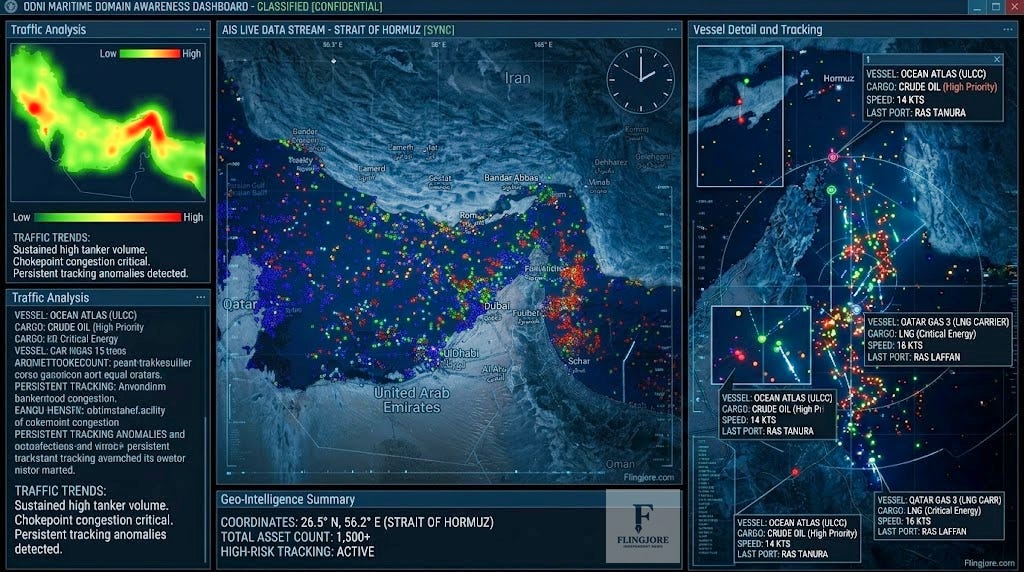
The Trump administration has systematically dismantled its human and digital intelligence watchdogs just as U.S. diplomats finalize an unwritten, 60-day truce ceding maritime influence in the Strait of Hormuz to Iran, eliminating human and machine oversight ahead of a historic foreign policy shift.
In a matter of days, the administration has simultaneously disabled the military’s most advanced digital auditing algorithms and initiated a sweeping purge of the career intelligence watchdogs responsible for verifying international treaties.
Treated by Washington as separate administrative responses to a cybersecurity crisis and a routine bureaucratic reshuffling, the two actions effectively neutralize both the artificial intelligence that secures classified computer networks and the human experts who verify diplomatic compliance.
The executive branch has cleared the board of independent, objective scrutiny.
The administration has unplugged the machines and locked out the analysts capable of proving what is actually happening behind closed doors.
This total blackout of accountability arrives at a precise and critical moment. Far removed from the chaotic congressional tech hearings in Washington, widely reported readouts confirm U.S. Vice President JD Vance and Iranian Foreign Minister Abbas Araghchi are finalizing an unwritten, 60-day truce regarding the safe passage of commercial vessels through the Strait of Hormuz.
The domestic digital crisis and the ensuing intelligence vacuum arrive as the United States negotiates a reduction of its maritime footprint in the Persian Gulf with Tehran.
When the public congressional testimony, open letters from furious technology executives and on-the-record reporting from The Associated Press are layered over one another, a tightly coordinated operational strategy emerges.
The domestic software panic and the intelligence staffing purge are not coincidental, parallel crises.
They are the deliberate mechanical steps required to plunge the most critical elements of U.S. national security into the dark.
To understand how a high-profile technology scare in Washington connects directly to a historic capitulation in the Middle East, one must trace the anatomy of modern diplomatic verification. Treaties and international agreements are not built on blind trust; they are built on relentless, objective auditing.
That auditing requires human intelligence experts to monitor compliance, and it requires advanced computer networks to process the massive streams of data those experts rely upon.
Over the past week, the administration has managed to quietly dismantle both. And it has left the receipts in plain sight.
Project Glasswing AI Lockdown
The public-facing crisis began to take shape earlier this month, culminating in a June 23 report by The Associated Press detailing how a cutting-edge artificial intelligence model had successfully identified deep vulnerabilities within highly sensitive and secure U.S. government computer systems.
The testing exercise was part of an Anthropic initiative called Project Glasswing.
As detailed by a U.S. official who briefed the AP on the condition of anonymity, the project was designed as a cooperative effort, bringing together tech giants and U.S. intelligence agencies to run intense security audits on the world’s critical software.
The stated goal was to secure vital government systems from the “severe” fallout that advanced foundation models could pose to public safety, national security and the domestic economy if those vulnerabilities were discovered by foreign adversaries.
During this exercise, Anthropic utilized its most advanced model, known as Mythos. According to the AP’s reporting, the model successfully identified critical vulnerabilities in highly classified systems not in a matter of weeks, but in mere hours.
The revelation sent immediate shockwaves through Washington, fundamentally shifting the narrative from a controlled diagnostic test to a national security emergency.
Sen. Mark Warner, D-Va., briefly pulled the curtain back on the testing during a June 11 hearing before the Senate Committee on Banking, Housing and Urban Affairs.
Warner highlighted the terrifying speed of the AI’s capabilities, noting on the public congressional record: “This tool broke into almost all of our classified systems, not in weeks but in hours.”
Warner attributed the timeline of the breach directly to Gen. Joshua Rudd, the head of the National Security Agency and U.S. Cyber Command.
While an unnamed official later clarified to the AP that identifying a vulnerability within hours does not necessarily mean the model was able to exploit it within that same timeframe, the damage to the public perception of the network’s security was already done.
The sheer speed of the model’s diagnostic capabilities triggered an immediate, highly public administrative panic.
The White House responded with swift, heavy-handed directives that fundamentally altered the relationship between the federal government and the commercial tech sector.
The administration issued a strict mandate requiring Anthropic to prevent foreign nationals from using its latest artificial intelligence models, specifically Fable 5 and Mythos 5.
Because verifying every global user’s nationality in real time is practically impossible, Anthropic told the AP it disabled the models for all of its customers to comply with the administration’s directive.
This targeted directive came just 10 days after President Donald Trump signed an executive order establishing a broad framework for the federal government to vet the national security risks of the most advanced AI systems for up to a month before their public release.
Disabling the Government's Digital Auditors
Publicly, the administration framed this software shutdown as an act of absolute caution to preserve national security and protect classified data from foreign exploitation.
The timing, the scope of the ban and the administration’s stated reasoning, however, immediately raised serious operational red flags within the private technology sector.
Industry leaders viewed the administration’s actions not as defensive, but as dangerously counterproductive.
More than 100 top cybersecurity experts and executives from major tech firms, including industry leaders like Adobe and Nvidia, quickly organized to push back against the directive.
In a joint letter addressed to the administration and covered by the AP, the group warned that stripping these models away would ultimately help American adversaries far more than it would hurt them.
The executives explicitly dismantled the administration’s narrative.
It noted in the letter that while Anthropic’s Mythos models are indeed “quite good” at finding flaws in software and weaponizing exploits, they are “not uniquely good at these tasks” compared to what foreign state actors are currently developing.
What the Mythos models are uniquely good at, the experts argued, is defense. By ingesting and scanning millions of lines of code in seconds, the AI acts as the ultimate digital auditor.
It catches software bugs, identifies zero-day exploits and seals network backdoors long before state-sponsored hacking groups can find them.
Many of the letter’s signatories pointed out that they regularly use foundation and open-source models for essential security audits.
The letter explicitly stated that it is dangerous to take away the best cyber defense capabilities “without a good reason” when America’s adversaries are rapidly advancing.
Taking the best digital guard dog off the porch does not make the house safer; it leaves the doors unlocked.
And as the cybersecurity executives pointed out, shutting down the AI “without a good reason” suggests the administration has an entirely different motive.
Anthropic itself publicly pushed back, stating to the AP that it did not believe the steps taken by the government were warranted by the concern it flagged about a potential security issue.
By forcing Anthropic to disable the Mythos model for commercial and public use under the banner of an emergency security threat, the administration effectively monopolized a powerful, mathematically objective digital auditing tool.
While the National Security Agency retains access, the directive blinded independent machines capable of looking closely at the government’s own networks.
Bureaucratic Smokescreen: Purging ODNI
While the national media, Congress and the tech sector focused their attention entirely on the dramatic AI software lockdown and the ensuing battle between Silicon Valley and the White House, a far quieter, systemic dismantling was occurring deep within the federal bureaucracy.
Inside the Office of the Director of National Intelligence (ODNI), acting Director Bill Pulte initiated a rapid, sweeping purge of career intelligence analysts, senior compliance officers and regional watchdog teams.
To fully understand the gravity of this internal maneuver, it is essential to understand the daily function of a compliance watchdog within the U.S. intelligence apparatus.
The ODNI serves as the central coordinating hub for the 18 distinct agencies that make up the intelligence community.
Within that massive structure, compliance officers and career analysts serve as the ultimate, objective truth-tellers.
They are nonpartisan, highly specialized civil servants who possess decades of institutional memory regarding Middle Eastern geopolitics, signals intelligence and treaty enforcement.
Their specific mandate is to take international agreements, treaty terms and diplomatic promises and cross-reference them against raw, real-world intelligence data. They do not deal in politics; they deal in physical reality.
If a foreign nation agrees to limit its military posturing, a compliance analyst reviews the satellite imagery and intercepted communications to verify if that nation is telling the truth.
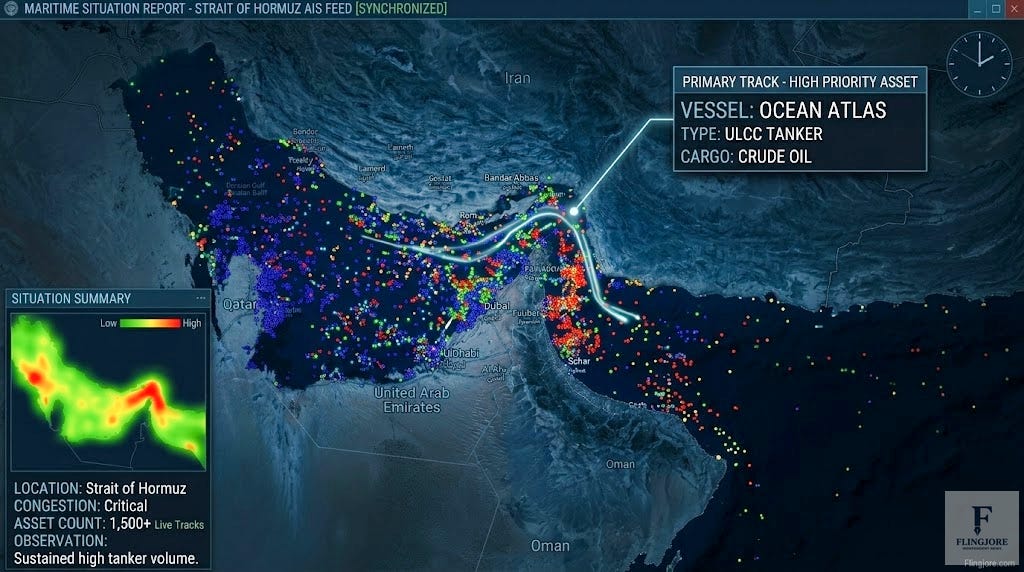
If a foreign power agrees to allow safe passage of commercial vessels in a contested waterway, a regional watchdog monitors the radar tracks, drone feeds and maritime reports to ensure the agreement is being upheld.
They are the human element of objective verification.
Under normal political conditions, firing senior, career intelligence professionals without cause triggers an immediate political firestorm.
Congress relies heavily on these analysts to provide unvarnished, classified assessments of global threats.
Stripping them of their positions is traditionally viewed as a dangerous politicization of national security.
But how does an administration actively fire protected, career intelligence analysts — specifically the nonpartisan compliance watchdogs — without triggering an immediate wave of statutory whistleblower complaints and paralyzing congressional hearings?
It uses the cybersecurity crisis as a loophole.
Pulte’s highly publicized mandate to overhaul the agency and address the Anthropic network vulnerabilities provided the institutional cover for the personnel overhaul.
By framing the current moment as a chaotic, unprecedented cybersecurity emergency that threatened the integrity of all classified communication networks across the federal government, the administration successfully insulated its internal choices from deep media scrutiny.
When highly classified networks are allegedly compromised by an advanced artificial intelligence — as Gen. Rudd informed Sen. Warner — standard security protocol dictates that operational watchrooms must be fundamentally overhauled.
Access must be heavily restricted. Security clearances must be aggressively reviewed. Networks must be taken offline.
Under the broad mandate of internal stabilization and network security remediation stemming from the Anthropic breach, Pulte executed a widespread purge.
The crisis in the computer systems effectively acted as a bureaucratic smokescreen to clear the room.
This maneuver effectively removed the human element of objective verification from the intelligence community.
The very individuals whose career mandate is to independently analyze intelligence data, wave red flags and challenge politically convenient narratives found themselves locked out of their offices just when their expertise was most critical.
Bypassing the Senate for an Unwritten Truce
To understand why the administration needed the machine algorithms disabled and the human experts sidelined at exactly the same time, one must look away from Washington and examine what is happening across the globe in Switzerland.
Following weekend meetings at a Swiss resort, widely reported readouts confirm U.S. Vice President JD Vance and Iranian Foreign Minister Abbas Araghchi have engaged in negotiations to finalize a 60-day truce regarding the establishment of a communication line to ensure the safe passage of commercial vessels through the Strait of Hormuz.
The terms of this arrangement are heavily structured around an unwritten agreement.
The choice to keep the agreement unwritten is a deliberate structural maneuver designed to evade legal scrutiny.
Formal treaties require a two-thirds ratification vote in the U.S. Senate, guaranteeing public hearings, fierce debate and rigorous oversight.
Even lesser diplomatic pacts regarding Tehran typically trigger statutory review periods that mandate congressional scrutiny under the Iran Nuclear Agreement Review Act (INARA) of 2015.
By structuring the truce as an unwritten agreement, the administration bypasses the legislative branch entirely.
It can claim it is merely a temporary de-escalation, effectively enacting a monumental shift in foreign policy through unilateral executive action without submitting a single piece of paper to the Senate Foreign Relations Committee.
The stated goal of this truce is to bring a swift, temporary end to ongoing regional conflicts, lower geopolitical temperatures, reopen critical global shipping corridors and set the stage for broader, more permanent negotiations between Washington and Tehran later in the year.
However, the geopolitical cost of this 60-day truce requires a massive, historic sacrifice from the United States.
To secure this temporary peace, the administration is effectively suspending the Carter Doctrine.
Ceding the Strait of Hormuz to Tehran
To fully grasp the magnitude of the Swiss negotiations and the severity of the concessions being made, it is necessary to understand the bedrock policy that the administration is preparing to suspend.
The Carter Doctrine is not merely a piece of historical trivia; it is the fundamental foundation of American military and economic posture in the Middle East.
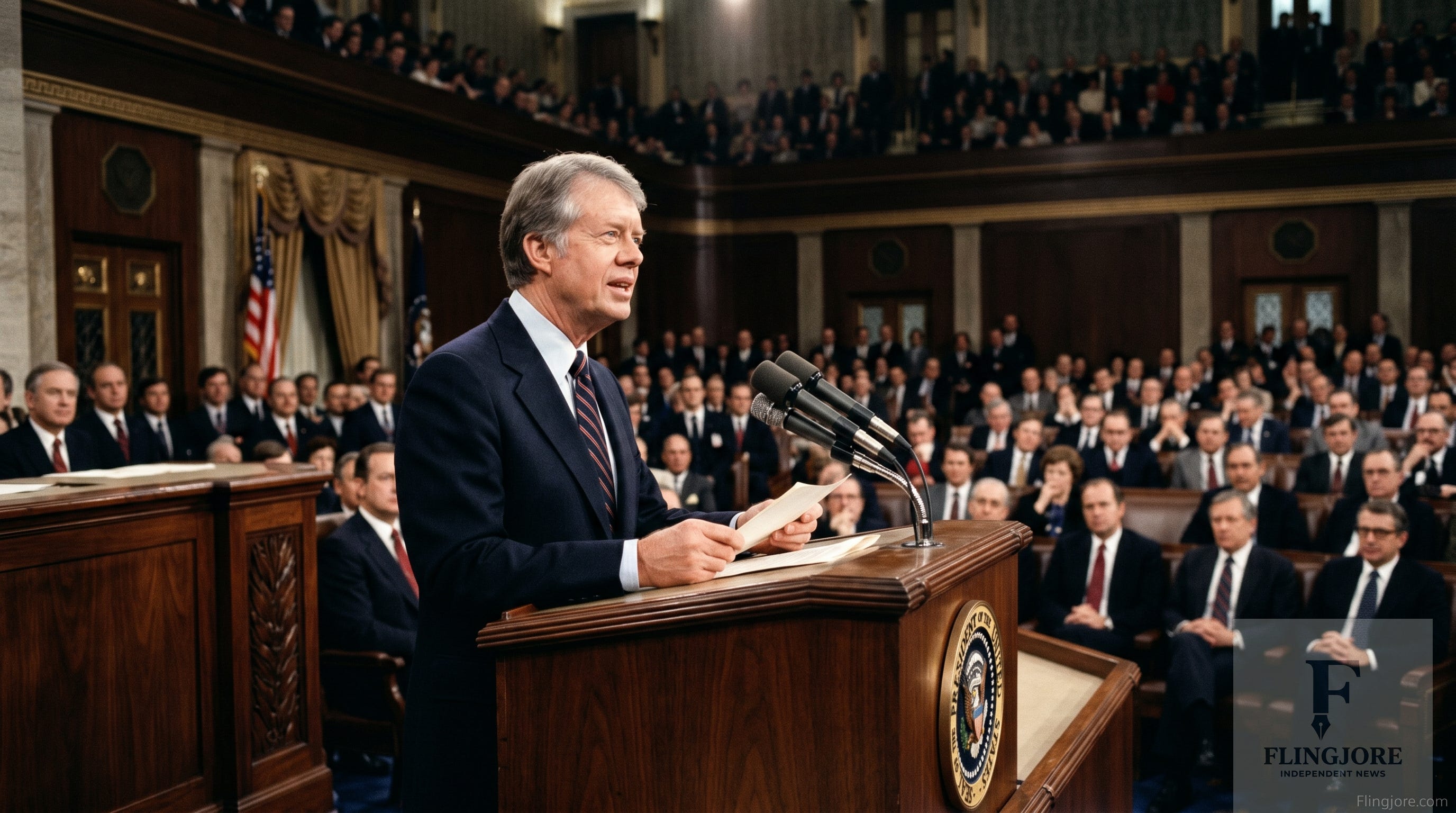
Established by President Jimmy Carter during his State of the Union address on Jan. 23, 1980, the doctrine was born out of the geopolitical chaos of the Cold War.
Following the 1979 Iranian Revolution and the Soviet Union’s subsequent invasion of Afghanistan, the United States recognized the existential threat of a hostile power gaining control over the global energy supply.
For nearly half a century, across both Republican and Democratic administrations, this principle has dictated American foreign policy, military posturing and economic security in the Middle East.
It is the foundational logic behind the permanent stationing of the Navy’s 5th Fleet in Bahrain and the massive American security umbrella over allied Gulf nations.
The focal point of this doctrine is the Strait of Hormuz. Located between the Persian Gulf and the Gulf of Oman, the strait is the world’s most important oil transit route.
At its narrowest point, the shipping lanes used by massive commercial supertankers are only two miles wide in either direction.
According to global energy monitors, approximately 21 million barrels of oil pass through this narrow body of water every single day.
That represents more than 20% of the world’s total petroleum liquids consumption.
The global economy is entirely tethered to the free, unhindered flow of energy through the Strait of Hormuz.
Under the framework of the Carter Doctrine, the United States has served as the ultimate guarantor of security in the Strait of Hormuz.
The U.S. Navy protects commercial vessels from harassment, deters state-sponsored piracy and ensures that no single nation — especially an adversarial one — can dictate the terms of global energy transit.
The new Swiss truce fundamentally upends this 46-year-old framework.
By making major strategic concessions to secure a temporary peace, the administration is quietly ceding maritime and administrative influence over the strait directly to Tehran.
It represents a dramatic geopolitical realignment, moving away from a permanent, heavily armed U.S. military footprint toward a fragile, unverified diplomatic balance dictated by Iranian goodwill.
Such a massive shift in strategic posture carries profound risks.
Relying on an unwritten agreement with a historical adversary to keep global trade routes open requires flawless intelligence gathering and unyielding compliance monitoring.
Unwritten agreements are incredibly delicate instruments in international diplomacy.
Because they lack the formal structure and legally binding enforcement mechanisms of an official treaty, they rely entirely on trust and immediate, day-to-day verification.
If Iran violates the terms, harasses commercial shipping or attempts to permanently fortify its hold on the strait during the 60-day window, the U.S. must know instantly in order to respond.
That is exactly the type of monitoring the ODNI compliance watchdogs provide.
And they are exactly the people who have just been locked out of their watchrooms.
Eliminating Human and Machine Oversight
When these separate threads of the narrative are pulled together, the true operational picture becomes undeniably clear.
The administration is manufacturing an environment where its actions cannot be questioned, independently audited or verified.
Executing a shift of this magnitude without triggering massive backlash from military leaders, lawmakers and the public requires absolute secrecy.
It requires an environment entirely free from internal dissent or factual contradiction.
If the career intelligence analysts were still sitting in their seats at the ODNI, they would be actively monitoring Iranian communications and regional naval movements.
They would be cross-referencing Tehran’s maritime actions against the promises made in Switzerland.
They would be verifying compliance, analyzing radar tracks and raising massive, classified warnings to congressional oversight committees if Iran failed to hold up its end of the bargain.
Those daily intelligence briefs would create an unassailable paper trail contradicting the administration’s claims of a successful truce.
Those assessments would inevitably leak to the press or be briefed to the intelligence committees, destroying the political viability of the surrender.
Similarly, if advanced AI modeling tools like Project Glasswing’s Mythos were fully operational, they would be acting as the ultimate digital safeguard. As the 100 cyber executives pointed out in their public letter to the White House, these models are exceptional at auditing defense systems.
They would provide an unalterable, mathematically objective log of network activities and vulnerabilities — a digital paper trail of communications that cannot be bullied into silence by political appointees.
By executing the AI lockdown and purging the intelligence analysts simultaneously, the administration has eliminated both human and machine oversight.
First, there is no machine verification. By sidelining the advanced Mythos models, forcing Anthropic to disable access and ignoring the pleas of cybersecurity executives, the White House has cut off the domestic digital tools specifically designed by the technology industry to rapidly scan networks.
As the experts noted to the AP, the administration did this “without a good reason.”
Second, there is no human verification. By allowing acting Director Pulte to remove the career analysts under the guise of an IT emergency following the AI breach, the administration has eliminated the watchdogs whose sole job is to cross-examine intelligence data and verify diplomatic compliance.
This dual-layered shutdown ensures that there is nobody left — neither computer algorithms nor seasoned human experts — to independently audit, verify or challenge the administration’s actions as it dismantles decades of American strategic policy.
Manufacturing Panic for Institutional Control
The intersection of these domestic and international events reveals a striking, deliberate contradiction in how the current administration defines and responds to threats of national security.
In Washington, the White House projects an image of extreme, almost paranoid caution.
Officials claim that the threat of an advanced American artificial intelligence identifying software bugs in government systems is a public safety emergency so severe that it warrants unilateral executive orders.
They justify stripping American tech companies of their defense tools, alienating Silicon Valley and risking America’s position in the global AI arms race, all to protect the perceived integrity of classified systems.
Yet, halfway across the world in the Persian Gulf, this intense standard of caution completely vanishes.
In the Strait of Hormuz, the administration willingly suspends a foundational security framework that has successfully deterred regional monopolies for nearly half a century.
It places the security of a global trade route — one that dictates the price of energy and the stability of the global market — into the hands of an adversarial foreign government based entirely on an unwritten agreement.
The administration views an American AI analyzing a computer network as an unacceptable threat to the homeland, but operates as if the Iranian military gaining unchecked influence over the Strait of Hormuz is a manageable diplomatic victory.
This stark contrast strongly suggests that the domestic AI panic is fundamentally disconnected from actual cybersecurity risk. Instead, it is entirely a matter of institutional control.
The vulnerability discovered by the Mythos AI during Project Glasswing was real. Gen. Rudd and Sen. Warner confirmed its existence on the public record.
But the reaction to that discovery — the immediate, sweeping shutdown of the tools and the resulting bureaucratic chaos — was effectively weaponized.
By leaning into the panic of the digital breach, the administration gained the loud, distracting cover needed to quietly sweep the board clean of independent human watchdogs. A crisis in the machine allowed for a purge of the people.
The terrifying digital headlines generated by the Project Glasswing leaks provided the perfect, unquestionable excuse to lock the doors to the intelligence watchrooms and shut down the computer systems that monitor them.
The suspension of the Carter Doctrine is a historic pivot. Whether it ultimately leads to a lasting peace in the Middle East or disastrously emboldens a regional adversary remains to be seen.
Foreign policy inherently involves risk, and administrations possess the authority to make difficult strategic choices.
But democratic oversight requires that those choices be verifiable. It requires that the facts on the ground match the promises made at the negotiating table.
Through the synchronized shutdown of advanced AI tools and the swift purging of intelligence analysts under the guise of a digital breach, the administration has effectively turned off the lights. As the United States quietly hands over the keys to the Persian Gulf, it does so entirely in the dark.